
QUANTIFIED VALUE
How to prevent weld porosity at the source: active gas control and real-time AI alerts
SUXIN Academy · ~4 min read
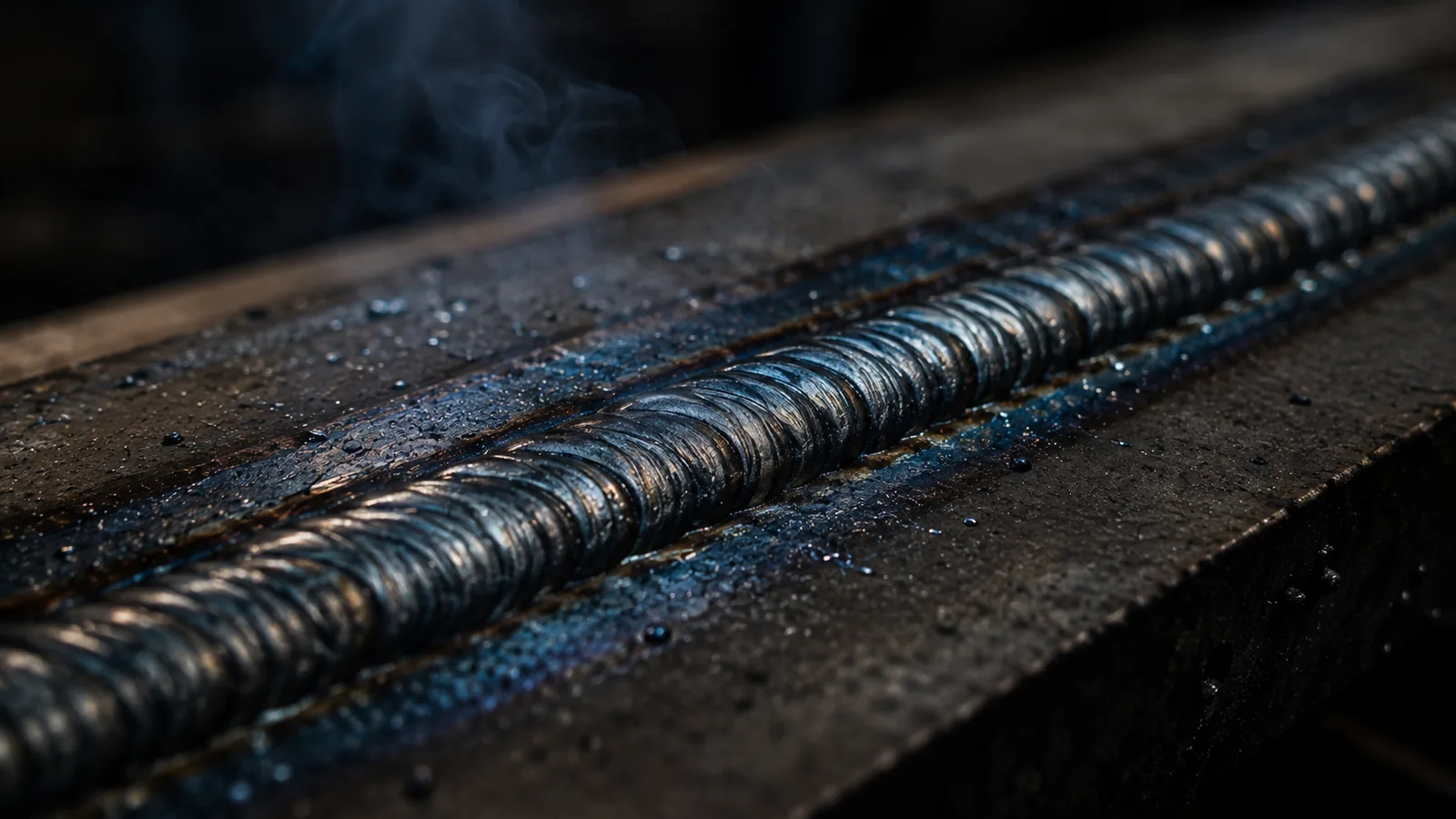
Porosity is one of the most common defects in a weld: as the molten pool solidifies, gas that cannot escape in time is trapped inside, forming voids that weaken the weld’s mechanical properties and, in severe cases, force the whole weld to be reworked.
Its causes are varied, but a good share relate to the shielding gas — insufficient or turbulent flow letting air intrude, oil and moisture on the base metal or wire surface, and fluctuations in process parameters can all trigger porosity. In addition, gas-line leakage is a hidden trigger: once a leak occurs, either the shielding gas is insufficient or the flow has to be turned up very high — both deviate from normal supply and further raise the probability and risk of porosity. It is worth noting that shielding-gas flow is not “the more the better”: too much creates turbulence and draws in air, which likewise causes porosity.
The key to prevention is stable, appropriate shielding-gas coverage and a controllable process. A more reliable approach is to monitor current, voltage and gas flow in real time and raise an alert the moment they deviate from the set range — intervening when the conditions for a defect appear, rather than waiting until final inspection to find porosity.
Among these, leak detection especially deserves mention. One reliable criterion is to capture current and gas flow in parallel and read them against each other: if there is no welding current over some period (no welding in progress) yet gas is still flowing, it can be judged a leak or end-of-weld spill — hard to spot from gas flow alone or current alone, but detectable in full when the two run in parallel.
Combined with process comparison and closed-loop improvement, this turns “reworking porosity after the fact” into “suppressing the triggers in-process,” lowering the porosity rate at the source — saving rework and keeping shielding gas at the right flow.
Suxin has years of work in smart welding and welding quality control, with 70+ invention patents, capturing current and gas flow in parallel at a measurement precision of 1% FS calibrated by a third-party metrology institute. If porosity is a common problem in your company’s welds, consider starting with a quality-dashboard demo.